Custom Websites and Business Systems | RCB Software

Custom websites + business systems

Your website should do more than collect enquiries.

RCB Software builds your customer-facing website and the custom system behind it, so customers can take action online and your team can manage everything in one place.

Built for established businesses whose real process still moves through WhatsApp, email, spreadsheets, or paper after a customer makes contact.

Customer-facing website
A clear path for customers.
  • Learn
  • Submit
  • Upload
  • Pay
  • Track
Custom system behind itPrivate
One place to manage the process.
  • Review
  • Assign
  • Update
  • Manage
  • Report
01 / The gap after the form

Most websites stop where the real work begins.

A customer submits a form. Then your team has to copy the details into a spreadsheet, ask for missing information on WhatsApp, check payments, send manual updates, and remember what needs to happen next.

The website created the enquiry, but it did not help the business manage it.

Customers are left waiting.
  • They repeat information across messages and forms
  • They cannot see what is happening
  • They have to ask for routine updates
  • They are unsure what action comes next
Your team does the work manually.
  • Information arrives in different formats
  • Details are copied between disconnected tools
  • Staff repeatedly chase missing information
  • Progress depends on messages, memory, and spreadsheets

RCB Software connects the public website to the private tools that keep the work moving.

02 / What RCB Software builds

The public website and the private system should work together.

Every project starts with the customer journey and the work your team must perform behind it. Only the parts that genuinely need to be custom are built.

  1. Customer-facing website

    A professional public website that explains the business clearly and gives customers an obvious path to inquire, order, book, submit information, or begin a process.

  2. Guided customer actions

    Forms and step-by-step experiences that collect the correct information from the beginning instead of creating another incomplete message for staff to reorganise.

  3. Customer portal

    Secure accounts where customers can upload documents, view information, complete required actions, make payments, or track progress when the workflow requires it.

  4. Admin dashboard

    A private workspace where the team can review customers, requests, orders, documents, payments, statuses, and the work created through the website.

  5. Custom workflows and integrations

    Business-specific rules, notifications, approvals, payment flows, and connections to useful existing tools without rebuilding software that already works.

  6. Ongoing support

    Maintenance, technical oversight, and continued improvements from the person who understands why the system was built the way it was.

Not every project needs every component. The scope should contain the smallest useful combination that solves the real problem.

03 / Selected work

Built around the way each business actually operates.

These are real client projects—not concept demos. Each public website is connected to the tools the business uses to manage the work behind it.

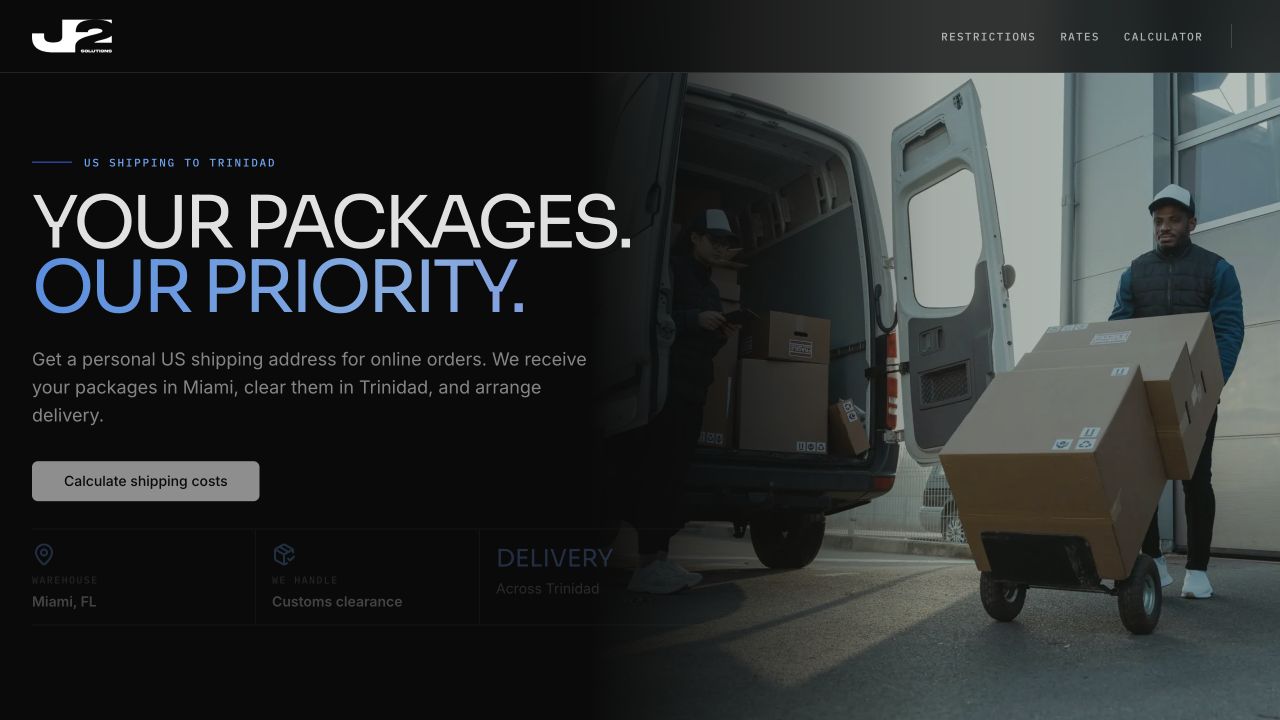
J2 Shipping customer-facing websiteReal client work · J2 ShippingA customer-facing shipping website and the private system used to manage customers, parcels, statuses, notifications, and payment communication.

Before: Customer and parcel information had to be collected, organised, and communicated across a process with several moving parts.

  • Customer registration and private dashboards
  • Miami warehouse and parcel information
  • Shipment status management
  • Administrative customer and package views
  • Customer alerts, email updates, and payment links
  • A connected web and mobile customer experience where applicable

Customers have a clear place to manage their shipping information, while the team works from the same structured records behind the scenes.

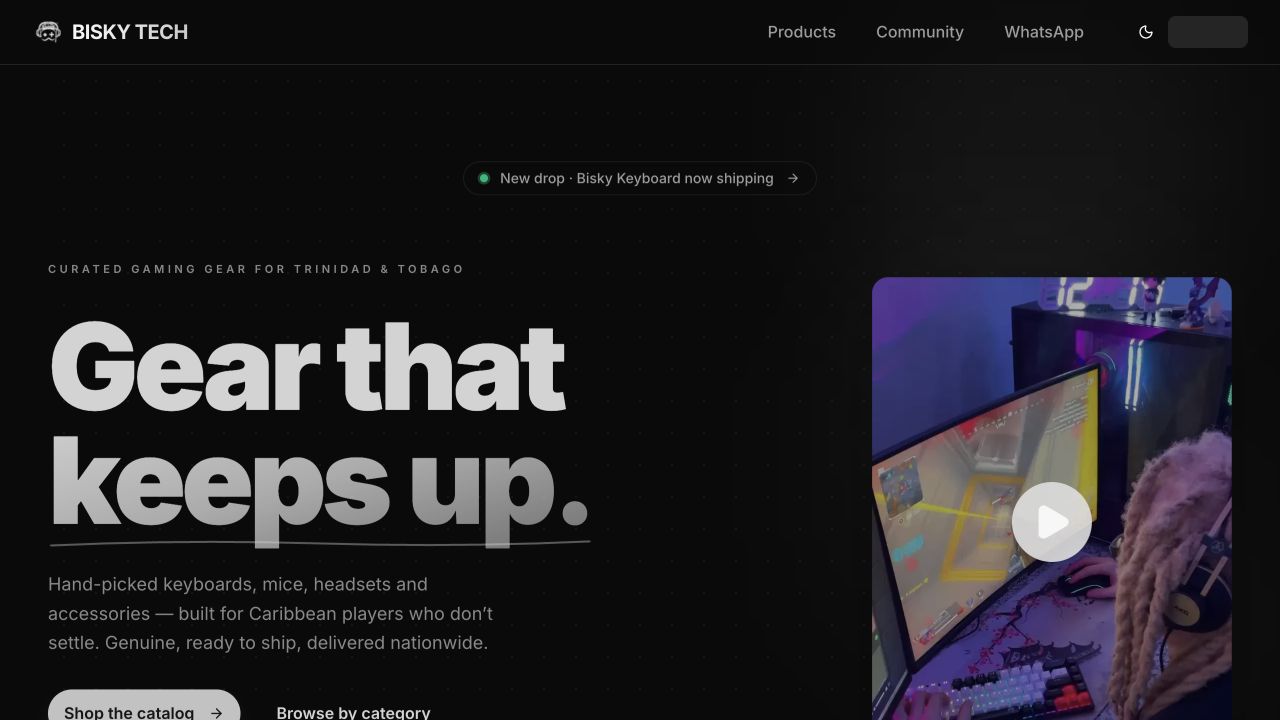
BiskyTech public product catalogue and shopping experienceReal client work · BiskyTechA public product catalogue and shopping experience connected to the tools used to manage products, inventory, promotions, customers, and sales.
  • Searchable product catalogue
  • Shopping cart
  • Customer accounts and order history
  • Inventory management
  • Coupon codes
  • Sales dashboard
  • Cart-to-WhatsApp checkout

The website handles product discovery and order structure while WhatsApp remains part of the final local buying conversation.

04 / Ways to work together

Start with the level of capability the business actually needs.

You do not need to arrive with a technical specification. Start by explaining what customers need to do and what your team currently has to manage manually.

Business website

For established businesses that need a focused, professional online presence and a clear path for customers to learn, inquire, book, order, or make contact.

  • Responsive custom website
  • Clear customer journey
  • Conversion-focused calls to action
  • Technical SEO foundations
  • Launch and deployment support
FromUS$1,500

Website + custom business system

For businesses that need the public website connected to customer accounts, portals, dashboards, payments, documents, status tracking, or a business-specific internal workflow.

  • Customer-facing website or portal
  • Private admin dashboard
  • Authentication when required
  • Database and workflow logic
  • Business-specific functionality
  • Testing, deployment, and launch support
FromUS$5,000

Ongoing support

For businesses that want continued maintenance, troubleshooting, technical oversight, and smaller improvements after launch.

  • Maintenance and issue resolution
  • Technical monitoring
  • Small agreed updates
  • Continued guidance
  • Larger features scoped separately
FromUS$250/month
05 / How projects work

Diagnose the process before deciding what to build.

The project begins with the customer journey and the work behind it, then becomes a written scope before the main build starts.

  1. Understand

    We map what the customer is trying to accomplish, what your team must do afterward, where information currently gets lost, and what would make the project worthwhile.

  2. Define

    I recommend what should be a public website, what requires a custom system, what can remain in existing tools, and what should not be built.

  3. Design and build

    The customer experience and the system behind it are designed and developed as one coherent workflow rather than two disconnected projects.

  4. Launch and support

    The complete process is tested, launched, and documented. Continued support is available as the business changes and new priorities emerge.

The goal is not to build the most software. It is to build the missing parts that make the customer journey and the internal process work properly.

06 / Founder-led

One developer responsible for both sides of the result.

Ryel Banfield, founder and developer of RCB Software
Ryel BanfieldFounder and developer

I’m Ryel Banfield, the founder and developer behind RCB Software. I work directly with clients to understand the business, define the customer journey, design the system behind it, and remain responsible through development, launch, and continued support.

There is no handoff between a salesperson, project manager, designer, and unknown development team. You work with the person making the product and technical decisions.

Discovery and scopeDesign and buildLaunch and support
07 / Frequently asked questions

Questions before we begin.

Clear answers about scope, pricing, and what it is like to work together.

What makes this different from a normal website project?

A traditional website project usually ends with public pages and a contact form. RCB Software can also build the customer accounts, internal dashboard, data, workflow, and business-specific functionality required after a customer takes action.

Is this a prebuilt software product or SaaS subscription?

No. RCB Software provides custom development services. The website and private system are scoped and built around the way your business operates. Ongoing support may continue monthly, but you are not subscribing to the same generic product used by every client.

Can you build only a business website?

Yes. A focused business website begins at US$1,500. Custom functionality should only be added when the business problem justifies it.

What can the custom system include?

Depending on the project, it may include customer accounts, portals, dashboards, structured forms, document uploads, payments, order or job management, status tracking, notifications, reporting, permissions, and integrations.

Do I need to know exactly what system I need?

No. Explain what customers need to accomplish, what your team does after the enquiry, and where the current process becomes difficult. I will help turn that into a defined scope.

Will the project replace WhatsApp and our existing software?

Not unnecessarily. WhatsApp may remain useful for conversation, and existing accounting, payment, scheduling, or communication tools should remain when they fit. The custom work should solve the missing part of the process and connect useful tools where appropriate.

How much does a project cost?

Focused business websites begin at US$1,500. Projects involving a customer-facing website and custom system begin at US$5,000. Ongoing support begins at US$250 per month. Final pricing is based on a written scope.

How are projects paid for?

Most projects use a 60% deposit to begin and a 40% final payment before launch. Any different payment schedule will be stated clearly in the proposal.

Do you build native mobile applications?

Native mobile applications are not part of the current RCB Software offer. The focus is responsive customer-facing websites, portals, dashboards, and custom browser-based business systems.

What happens after launch?

Ongoing support is available for maintenance, troubleshooting, technical oversight, and continued improvements. Larger new features are scoped separately.

Start with the current process

Where does your website stop helping?

Tell me what happens after a customer contacts your business. Explain what information you collect, what your team does manually, and where the process becomes difficult. I will help identify the right place to start.

Discuss your project

You do not need a finished feature list or technical specification.